Meowdoku Speed Solving Techniques
Learn the techniques and mental shortcuts that top players use to achieve blazing-fast solve times on the Daily Puzzle leaderboard.
The Speed Solver's Mindset
Speed solving in Meowdoku is fundamentally different from casual play. When you're racing the clock, every second counts — and the biggest time-saver isn't faster tapping, it's faster thinking.
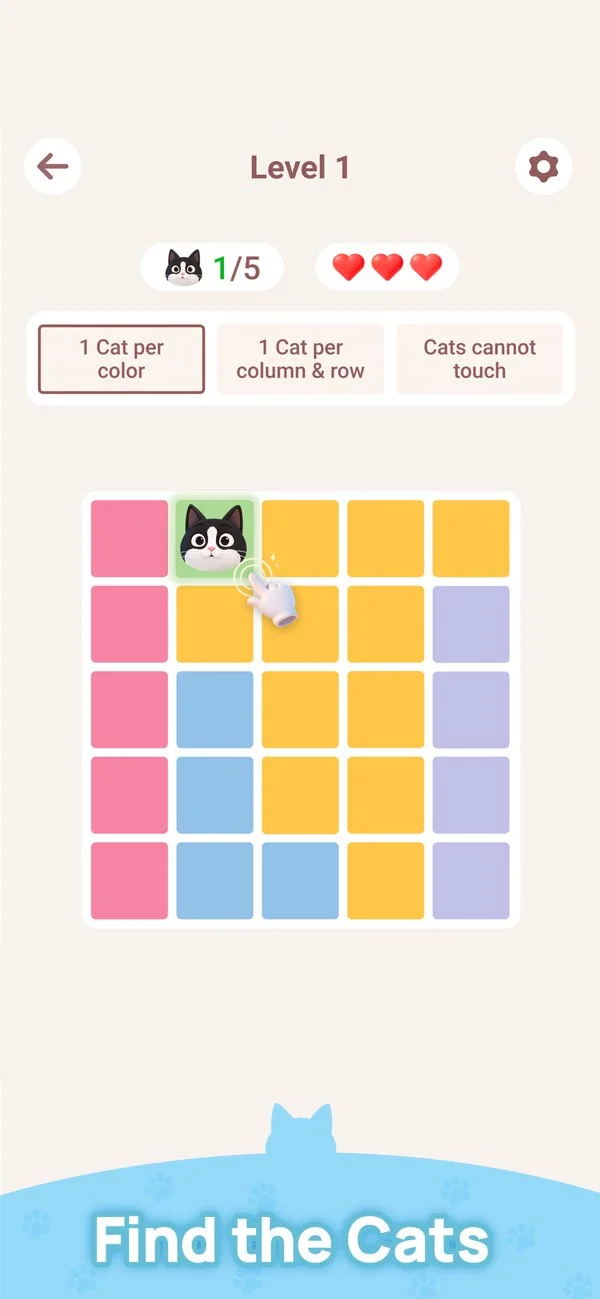 Speed solving requires pattern recognition and efficient workflow
Pattern Recognition Over Analysis: Top solvers don't methodically check each rule for each cell. Instead, they've internalized common board patterns to the point where correct placements "jump out" at them. This is the result of hundreds of hours of practice — your brain learns to process Meowdoku constraints the way a chess master sees the board.
Trust Your Instincts: When speed solving, your first instinct about a placement is usually correct — especially once you've built experience. Second-guessing costs precious seconds. If you're 90%+ confident, place the cat and move on. The remaining 10% uncertainty is almost always resolved by the deduction chains that follow.
Pre-Scanning the Board: Before you place a single cat, spend 3–5 seconds scanning the entire board. Identify the 2–3 smallest regions and note any obvious forced placements. This initial scan sets up a rapid-fire sequence of placements that carries momentum through the entire solve.
Step-by-Step Speed Workflow
- 1Quick Board Scan — Identify Smallest Regions
Spend no more than 5 seconds. Your goal is to find 2–3 forced or near-forced placements that will kickstart your solve. Don't overthink — trust your pattern recognition.
- 2Place Obvious Cats First
Any region with only one possible cell gets a cat immediately. These are free placements that cost zero mental energy. In speed solving, free placements are gold.
- 3Chain Deductions Rapidly
After each placement, quickly check if any region now has only one possible cell. Don't pause to verify — if it looks forced, it probably is. The momentum of chained deductions is the secret to sub-60-second solves.
- 4Use Marking Only When Necessary
In speed solving, marking every blocked cell wastes time. Only mark when you're dealing with a complex region that has 3+ possible cells. Otherwise, track constraints mentally.
- 5Double-Check Before Final Placement
A single heart loss costs more time than 20 double-checks. On the last 1–2 placements, take an extra second to verify. The finish line is not the place to get sloppy.
💡 Pro Tip: Practice speed solving on puzzles you've already completed. Time yourself on familiar boards to isolate pure execution speed from deduction speed. Then apply that execution speed to new puzzles.
Common Speed Solving Mistakes
- Rushing Leads to Heart Loss: The #1 speed killer. A 2-second verification that prevents a heart loss saves you 30+ seconds of restart time. Speed comes from efficiency, not recklessness.
- Over-Marking Slows You Down: Some players mark every blocked cell religiously. This can double your solve time. Mark strategically — only when the visual aid meaningfully speeds up a deduction.
- Second-Guessing Correct Placements: If you placed a cat and it didn't trigger a heart loss, it's correct. Move on. Re-checking correct placements is the most common time-waster among intermediate speed solvers.
- Not Warming Up Before Daily Puzzle: Jumping into the Daily Puzzle cold leads to sluggish first-minute performance. Solve 1–2 easier puzzles first to activate your Meowdoku brain.
More Meowdoku Guides
Explore more articles to level up your Meowdoku skills: